- NEXT MAY
- REFORMER INTAKE
- EARLY BIRD DEAL CLOSES 27th OF APRIL 25
- NEXT MAY
- REFORMER INTAKE
- EARLY BIRD DEAL CLOSES 27th OF APRIL 25
The Pilates Roll Up — it looks so simple, so fluid, yet it remains one of the most persistently frustrating exercises for many clients. As instructors, we often see a look of confusion on a client’s face when they strain, grunt, and struggle to peel their spine off the mat, despite clearly possessing what they thought (& you thought) were strong abdominal muscles.
It’s an automatic assumption: if you can’t Roll Up, you must need stronger abdominals. While abdominal engagement is essential for powering the movement and controlling the return, it’s often only one piece of a much larger puzzle. Have you ever worked with a client who can hold a plank for days, perform other challenging abdominal work with ease, yet still hits a frustrating “sticking point” in their Roll Up? This is the moment where we, as instructors, must look beyond the obvious.
In many cases where strength is not the primary issue, the sticking point may be rooted in a lack of lumbar spine mobility. To execute a clean Roll Up, the lower back needs to be able to achieve a decent degree of flexion—aiming for the feeling of a deep, rounded ‘C’ shape (which we know at best for some people in full Lumbar flexion results in approximately a ‘straight lumbar). If the lumbar vertebrae are stiff or hesitant to move into this flexion (aka stuck in an anterior convex curve, or it’s natural ‘extension’ shape), the body will compensate. In starting the rolling up action, we often see the more mobile thoracic spine (the mid-upper back) take over, curling the shoulders and head forward, while the pelvis and lower and mid back remain stubbornly glued to the mat.
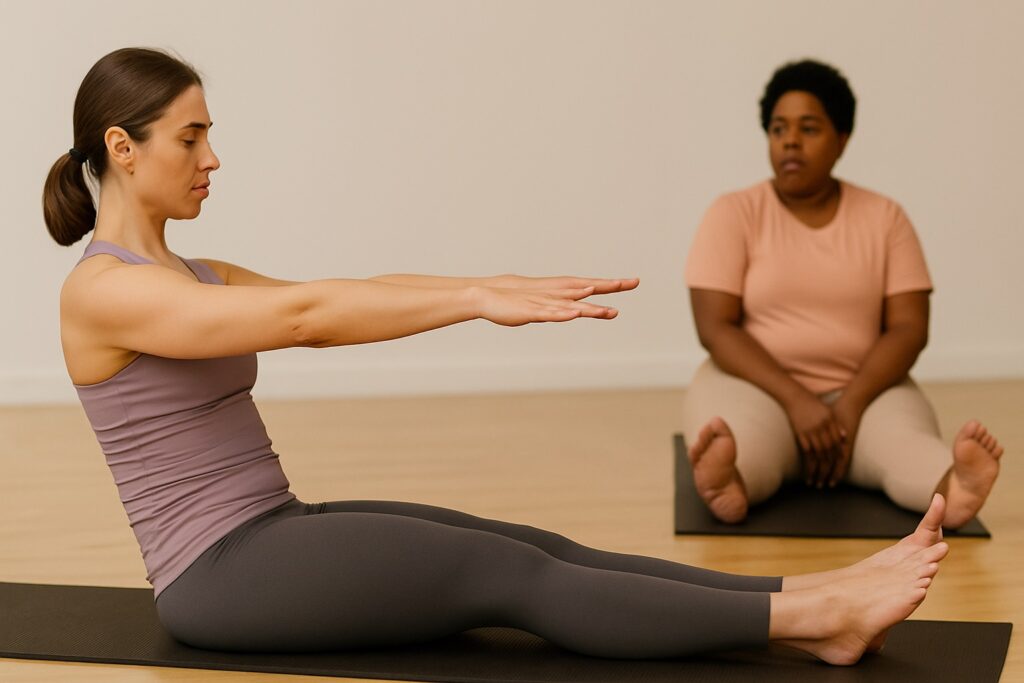
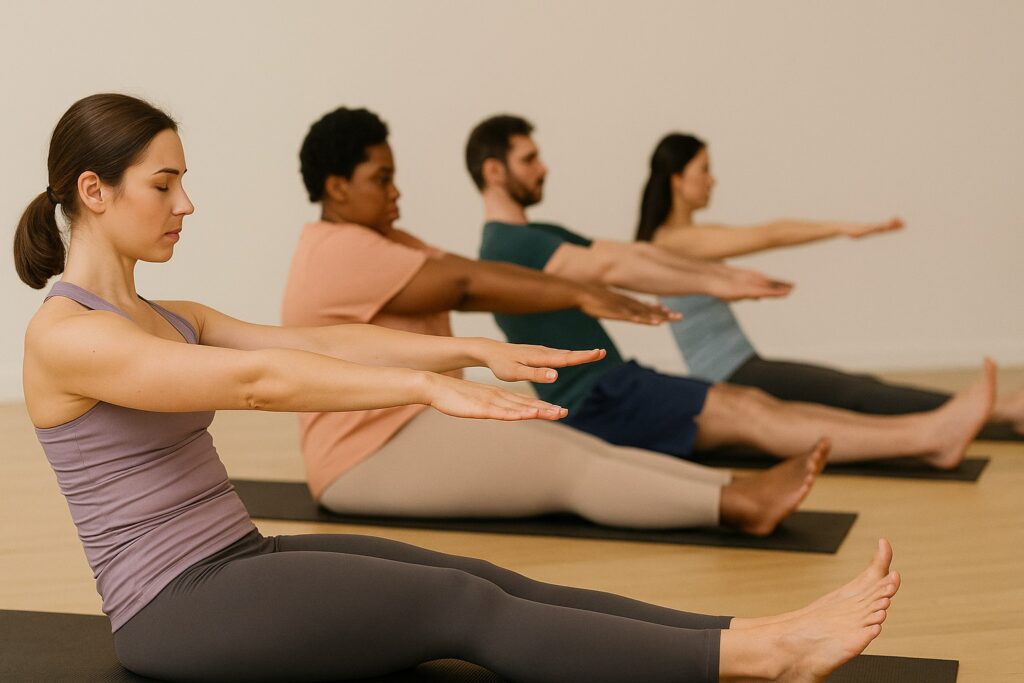
So, how do we fix it? The key lies in dedicated mobility work that isolates and encourages movement in that tricky lumbar region. We must teach the shape of lumbar flexion. This means using preparatory exercises—like Pelvic Tilts, or controlled segments of the Roll Down—to help the client articulate their pelvis and lower back independently of the thoracic spine. By working to increase the available lumbar flexion, we are not just making the Roll Up easier; we are restoring function and fluidity to a vital part of the spine.
It’s equally important to remember that not all spines are created equal. Due to individual bony structures and the unique shape of a person’s vertebrae, some clients may have a physical limitation to the amount of lumbar flexion they can ever achieve. For these people, pushing for a ‘textbook’ Roll Up may not only be frustrating but potentially counterproductive. A true expert instructor understands that our goal is not rigid conformity, but optimal movement within an individual’s unique physical architecture.
When a full Roll Up is not accessible—whether due to structural limits or while mobility is still developing—we have powerful tools at our disposal to make the exercise successful and empowering.
Want to know the ‘why’ and ‘how’ behind every movement? Check out our Pilates Instructor courses for Reformer, Matwork, or full Comprehensive Studio Equipment, and Advanced Scope training.
If you are already an instructor, but your original course elsewhere didn’t quite hit the mark, we’ve created the Bridging course for current instructors to help bridge the gaps, and fill you with knowledge, skills, and confidence. Check the website for more details.
