- NEXT MAY
- REFORMER INTAKE
- EARLY BIRD DEAL CLOSES 27th OF APRIL 25
- NEXT MAY
- REFORMER INTAKE
- EARLY BIRD DEAL CLOSES 27th OF APRIL 25
When you walk into a typical boutique movement studio today, it’s easy to see why Pilates is often perceived as a woman-dominated workout. But step back into history, and you’ll find a very different story.
The Pilates Method was originally created by a man—Joseph Pilates—who developed his system of “Contrology” to condition elite athletes, boxers, and internment camp soldiers, and even police at Scotland Yard. Designed as a rigorous, no-nonsense discipline of motor control and physical resilience, Pilates was always built to forge powerful, functional bodies regardless of gender.
Today, elite male athletes—from AFL players to NBA stars and Premier League footballers—regularly use Pilates to gain a competitive edge. Here is why the Pilates Method is one of the most effective, intelligent training systems any man can integrate into his regime.
Men can absolutely do Pilates. Pilates is a human movement system, not a gendered one. The human body requires the exact same biomechanical foundations to thrive: joint stability, core integration, multi-planar movement, and optimal muscle recruitment. Whether your goal is lifting heavy in the gym, improving your golf swing, or staying pain-free at a desk job, Pilates can directly challenge your physical limits.
Not only is it good for men—it often targets the exact physical blind spots traditional heavy weightlifting ignores. Traditional weightlifting and Pilates can challenge the neuromuscular system in different ways. Heavy resistance builds maximum force output, while Pilates emphasises motor control, precision in end-range positions, and controlled deceleration. Combining the two provides a balanced approach to athletic conditioning and physical longevity.
The landscape of Pilates is shifting rapidly. While women have made up the majority of studio clients over the past few decades, more men than ever are discovering the performance and longevity benefits of the method. As the conversation in sports science shifts toward loaded mobility, longevity, and injury prevention, men are moving away from the “no pain, no gain” mindset and turning to Pilates as an essential pillar of their physical preparation and longevity.
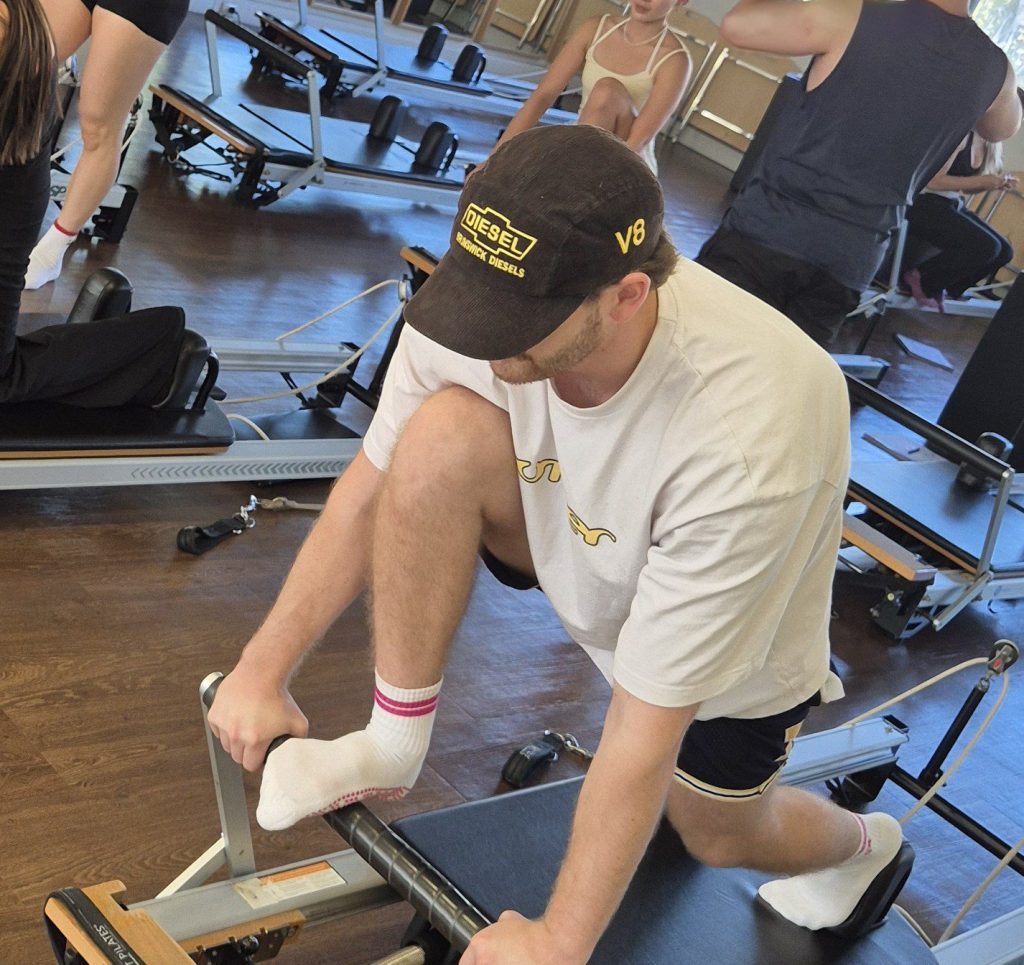
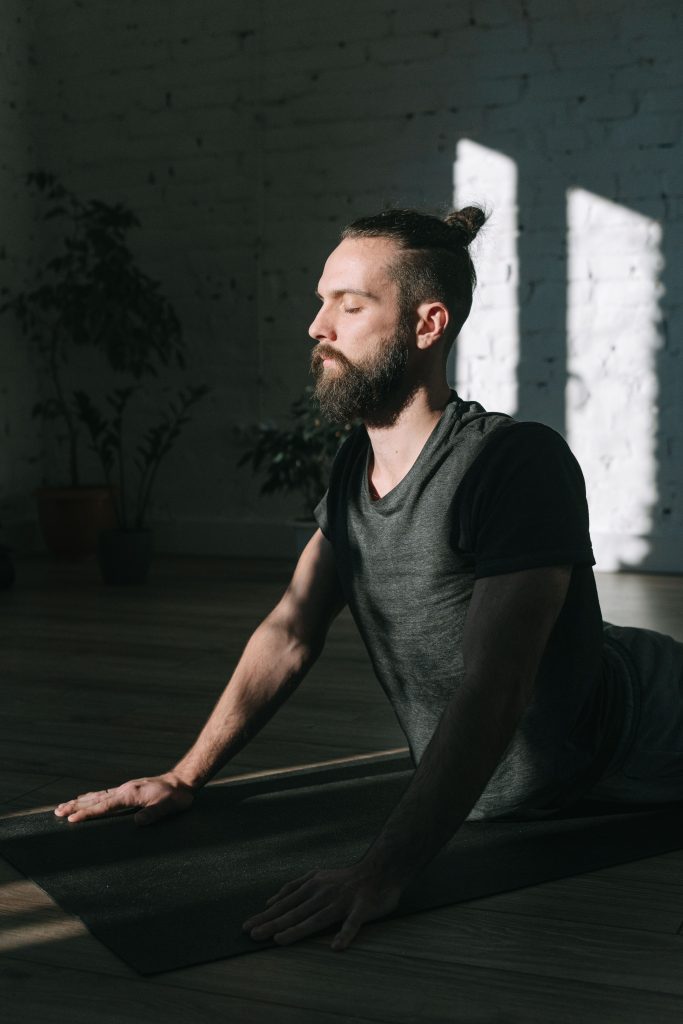
Pilates brings a range of great benefits from men than they may not be getting from other forms of exercise.
Pilates builds a distinct type of strength: deep, functional, and integrated. Rather than isolating individual muscles, every movement demands whole-body effort centred around the trunk. You’ll build functional core power, improved eccentric muscle control, and deep hip and shoulder stability that directly transfers into sports and heavy strength work.
Men typically hold more dense muscle mass and a feeling of ‘tightness’ through the hamstrings, hip flexors, shoulders, and lower back. Passive stretching rarely creates lasting changes in tight tissues. Pilates focuses on dynamic flexibility and loaded mobility—actively strengthening muscles while they are in lengthened positions—creating real, usable range of motion without sacrificing joint stability. And no – you do not need to be flexible to do Pilates.
While no exercise modality can completely prevent injuries, expanding your movement variability and capacity are key factors for overall physical resilience. Pilates encourages controlled movement through diverse ranges of motion, helping you develop strength in positions your body might otherwise avoid. During recovery, its adaptable support makes it a highly effective tool for re-introducing movement in a low-threat, progressive environment.
Joseph Pilates designed his method around total mental concentration and controlled breath. You cannot drift off or scroll on your phone during a Pilates session—every movement requires absolute presence. This intense mental focus down-regulates the central nervous system, reduces stress hormones, and leaves you with sharp mental clarity alongside a physical workout.
Different modalities offer distinct entry points and progressions depending on your goals:
Matwork is an exceptionally accessible option, allowing men the opportunity to exercise with minimal equipment—with your own body weight working against gravity. During matwork Pilates classes, men can work on the fundamentals of Pilates and gradually get comfortable before attempting more challenging movements. After establishing a strong baseline, the instructor can help modify exercises to increase intensity, lengthen levers, and add resistance.
The Reformer introduces dynamic spring resistance. The adjustable springs can either assist movement to help reach deeper ranges of motion or provide heavy eccentric load to build incredible strength and stability. Training on the reformer gives men a unique combination of feedback, challenge, and fluid resistance that traditional gym equipment simply cannot match.
For men managing specific injuries, chronic back pain, or sport-specific performance goals, clinical 1:1 sessions offer bespoke programming on full studio equipment (including the Cadillac, Wunda Chair, and Barrels). Guided by a qualified instructor, clinical Pilates isolates specific movement dysfunctions, modifies load with clinical precision, and builds an individualised pathway toward peak physical output.
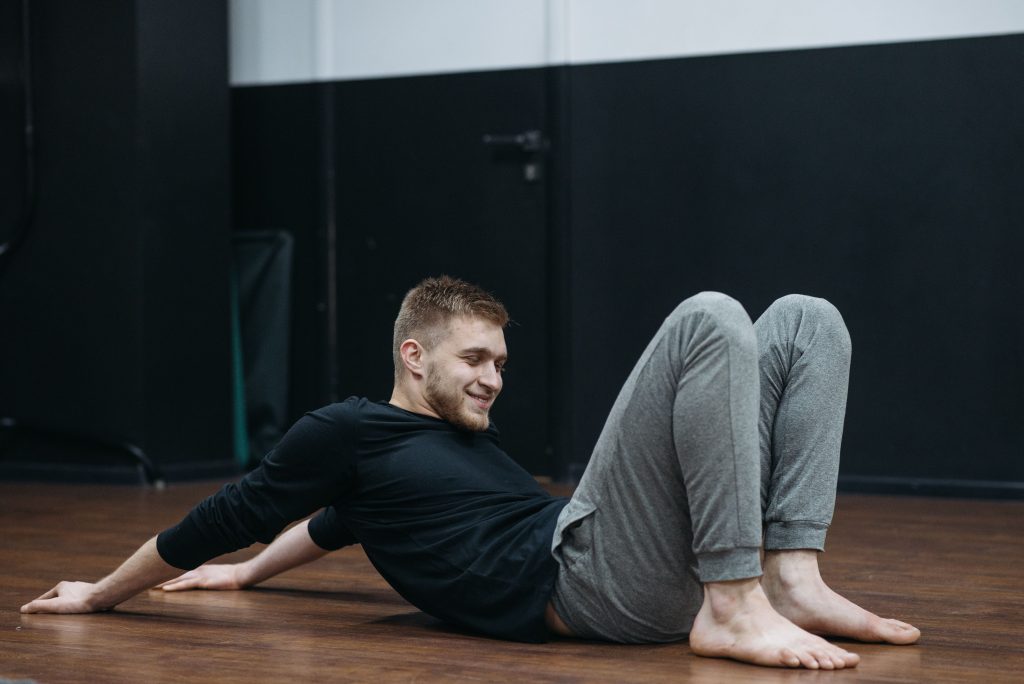
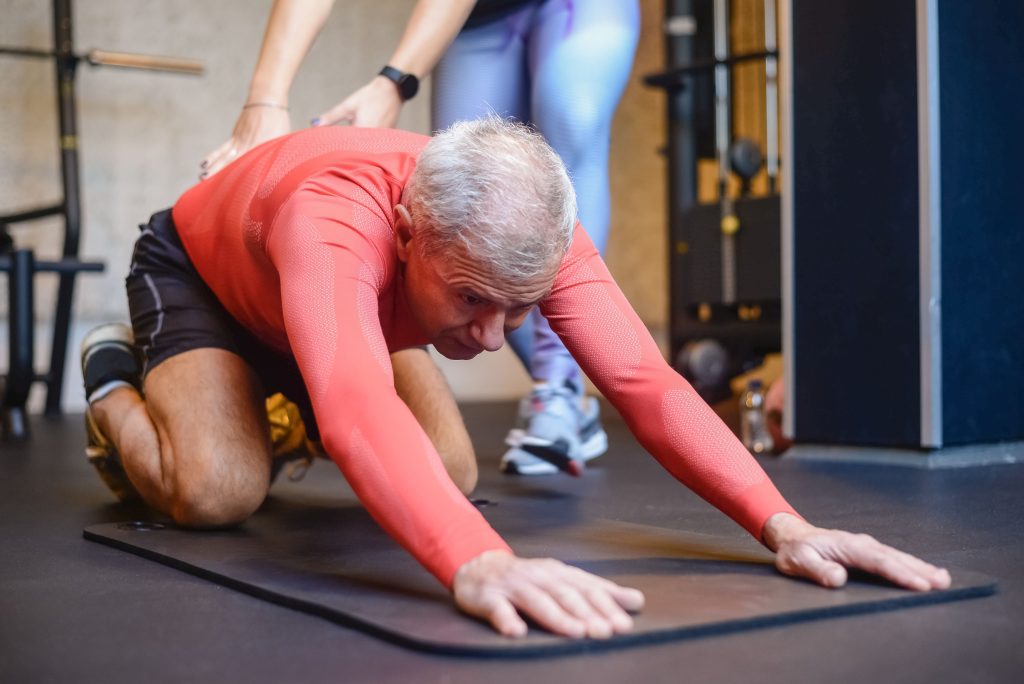
Pilates can initially feel harder for men, primarily because it targets movement pathways that men rarely train in traditional workouts. With typically higher upper-body muscle mass and less baseline joint laxity through the posterior chain and mid-back, men often find full-range mobility movements challenging at first. Pilates removes the ability to rely on momentum or sheer muscle force. By demanding deliberate speed control and precision across every inch of an exercise, it challenges the nervous system and motor control in ways standard workouts rarely do.
Comfort and freedom of movement are key in Pilates. While specialised gear isn’t necessary, a few simple guidelines keep sessions smooth.
The Pilates League gives you the chance to become a qualified instructor and run your very own Pilates class. We have different courses available to help you gain skill as an instructor, whether you want to improve your knowledge about types of Pilates or how to teach Pilates to specific groups like beginners, older people or pregnant women. Get in contact with us today and find the right course for you.
